

When a shipment arrives late, the additional cost rarely appears in one place—it spreads across the entire supply chain.
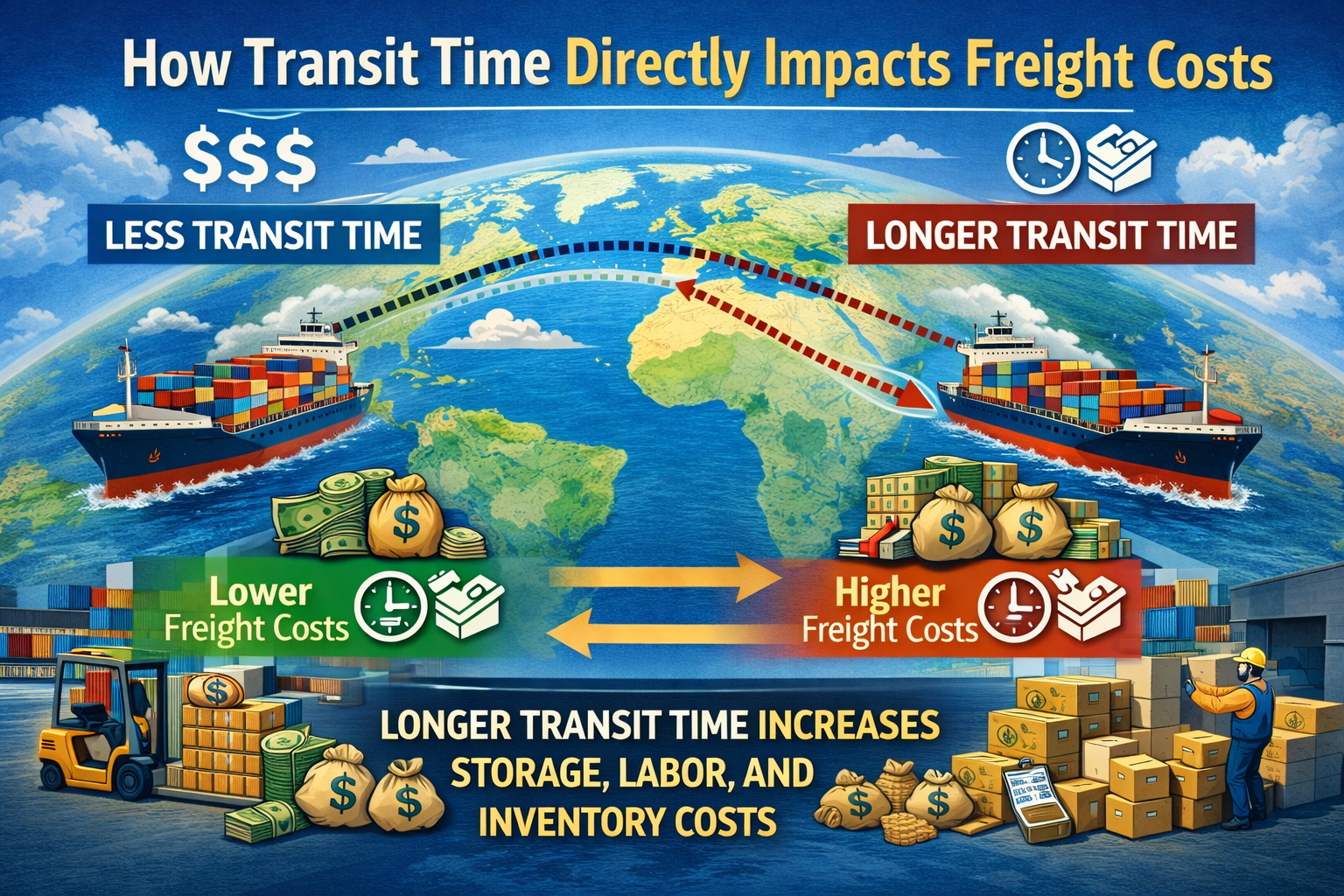
A shipment arriving five days late can cost more than a higher freight rate—not in theory, but on real invoices. Penalties, storage fees, missed connections, and idle inventory all add up. Transit time is not just a schedule—it is a cost driver.
Each extra day increases pressure: containers wait at terminals, trucks miss slots, and inventory stays idle. By the time cargo arrives, costs have already escalated.
Reliable transit time controls freight costs more than most shippers expect.
Transit time is more than the days a vessel spends at sea. It includes every hour a shipment is in motion or waiting, starting from the origin port until the goods are ready for the next step.
Components of transit time:
Every delay increases cost exposure. Even small pauses ripple across the supply chain, impacting freight, inland transport, and inventory.
Longer transit time rarely increases costs as a single line item. Instead, it spreads costs across multiple areas, making them easy to overlook until invoices arrive.
|
Cost Area |
What Increases |
Why It Happens |
|
Fuel charges |
Recovery speed costs |
Vessels accelerate to meet schedules |
|
Port charges |
Storage and detention |
Cargo waits longer at terminals |
|
Missed slots and rebooking |
Delayed arrival disrupts planning |
|
|
Inventory cost |
Capital tied up |
Goods remain in transit longer |
|
Revenue impact |
Lost sales or penalties |
Late delivery breaches commitments |
Each extra day opens multiple cost points across the supply chain.
Inventory costs begin counting the moment goods leave the factory. Transit time determines how long the clock runs.
Longer transit time leads to:
For high-value or fast-moving goods, even a few extra days can significantly increase overall costs. Transit time controls not just movement but also cash flow and margin health.
Reducing transit time may seem like the obvious solution—move faster, cut days, save money. In reality, rushing shipments can increase costs:
The goal is not the fastest transit time but the optimal transit time—balancing cost, reliability, and service quality.
Transit time sets expectations for delivery dates, production schedules, and sales plans. Delays disrupt these commitments, affecting trust and revenue.
Impact on customer commitments:
A reliable transit time strengthens customer relationships, while unpredictable shipping erodes trust—even if rates are competitive.
While weather and port conditions are uncontrollable, planning and execution choices significantly affect costs. Shippers who manage transit time proactively encounter fewer surprises and more predictable expenses.
Strategies to control transit time:
Control is about predictability, not speed. When transit time is stable, costs become easier to manage and margins more secure.
Transit time is the total duration a shipment takes from the origin to its destination. It includes time at sea, port waiting, customs clearance, and inland transport, not just the vessel’s sailing days.
2. How does transit time affect freight costs?
Longer transit time increases costs indirectly through:
Even a few extra days can significantly impact the total cost of shipping.
3. Why is a shorter transit time not always cheaper?
Rushing shipments can raise costs due to:
The most cost-effective approach is optimizing transit time, not simply minimizing it.
4. How can shippers control transit time costs?
Shippers can manage transit time by:
5. How does transit time impact inventory and cash flow?
Transit time directly affects inventory carrying costs. Longer transit ties up working capital, slows inventory turnover, increases storage and handling needs, and reduces flexibility to meet demand changes.
6. Can optimizing transit time improve customer satisfaction?
Yes. Predictable transit time ensures on-time deliveries, helps meet production and sales schedules, and builds trust with customers. Unstable transit time, even with competitive rates, can erode customer confidence.
7. What are the key components of transit time?
Transit time includes:
Each component can affect overall freight costs.
8. Is there a tool to calculate the total cost impact from transit time?
Many logistics platforms and freight management systems can model total shipment costs, factoring in fuel, port fees, inventory holding, inland transport, and potential penalties, helping shippers plan optimal transit times.
Transit time shapes freight costs before invoices appear. It affects:
The lowest freight rate does not guarantee the lowest total cost. Reliable transit time, not the cheapest quote, delivers real savings.
Take control of your supply chain: plan transit time strategically, protect margins, and enhance customer trust.
Contact our logistics experts today to optimize every shipment and reduce hidden costs.

Your Global Trade Navigator, Delivering End-to-End Excellence and Unlocking New Opportunities in Every Link of Your Supply Chain.
Get In Touch

Explore our expert guide on Full Container Load (FCL) Shipping, covering benefits, processes, and tips to optimize your shipping experience efficiently.
Learn More FCL Shipping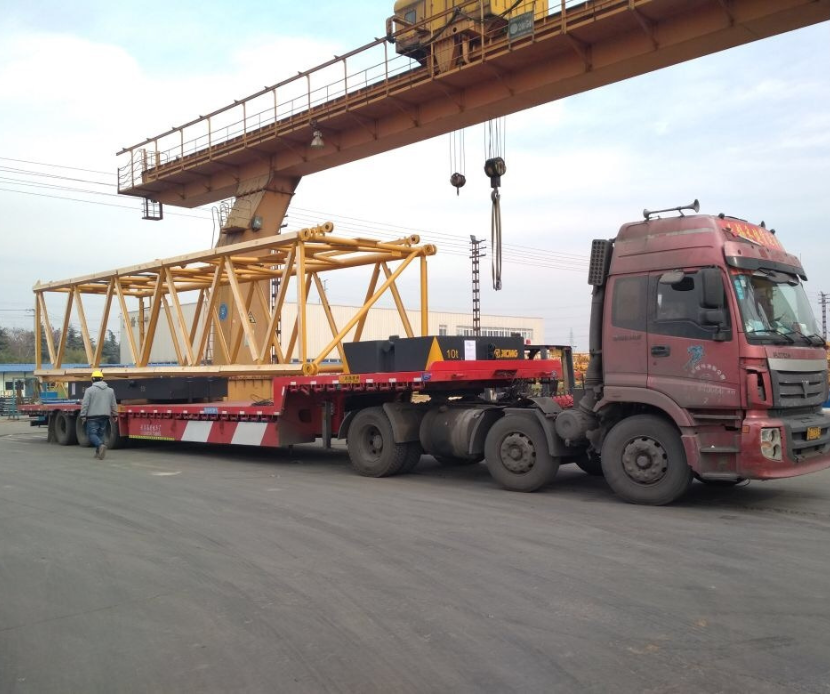
SJ Logistics specializes in the global transportation of high-value, oversized cargo, ensuring safe and efficient delivery for your most complex project logistics needs.
Learn More Project Cargo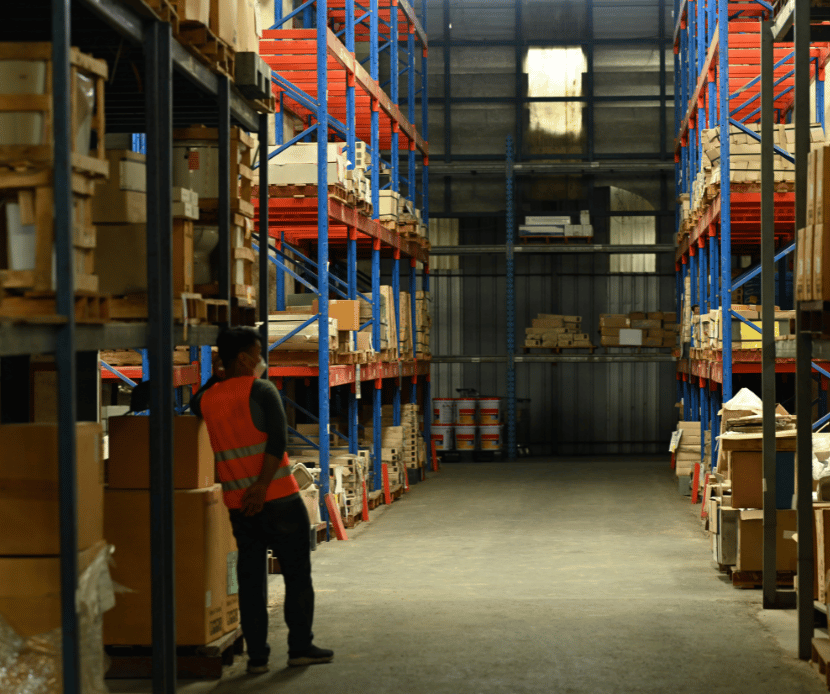

Discover tailored warehousing solutions at SJ Logistics, designed for efficiency and strategic storage. Optimize your supply chain with our innovative services today!
Learn More Warehousing
Discover comprehensive NVOCC solutions that streamline your logistics operations, enhance efficiency, and ensure seamless cargo management for your business needs.
Learn More NVOCC

Discover reliable inland transportation solutions that streamline your domestic logistics, ensuring timely and efficient delivery across the country.
Learn More Inland Transportation

Experience unparalleled convenience with our door delivery solutions, ensuring your packages arrive safely and promptly right at your doorstep. Discover more today!
Learn More Door Delivery

Experience seamless customs clearance with SJ Logistics. Our expert-led solutions ensure precision and efficiency, streamlining your import and export processes.
Learn More CHA

Experience unparalleled speed and reliability with our air freight services, ensuring your cargo reaches its destination swiftly and safely, no matter the distance.
Learn More Air Freight

Unlock the benefits of LCL shipping with our tailored solutions. Enjoy flexibility, cost savings, and strategic support designed for SMEs to thrive in global trade.
Learn More LCL Shipping